Gardening in Winter
Last Updated on January 16, 2026 by Annie Bernauer
Despite it being cold and wintry outside, there are plenty of ways to enjoy gardening in winter! For us gardeners, sometimes it’s difficult to cope with not being able to garden in winter. But have no fear, I’m here to tell you it’s possible to get your gardening fix mid winter!
There are plenty of winter gardening tasks to tackle before the busy growing season ahead. The ground may be frozen so those of us with a green thumb who are itching to start gardening can get a head start on the gardening season with these eight winter gardening tasks.
This list of eight winter gardening tasks can be used like a checklist. Start with the first task and work your way down through the list. By the end of the list you’ll be starting seedlings and winter sowing seeds outside!
1. Organize Garden Seeds
I like to keep my garden seeds organized so I know what seeds I have and what I need to get for the next growing season. Unfortunately during the busy planting and growing season, my garden seed organization turns into a disaster!
As I take out specific seeds to plant during the growing season, I’m so busy I don’t have time to put everything back into it’s organized spot. This means that at the end of the gardening season I have a big, messy pile of garden seeds.
A number of years ago, I discovered a great way to organize my garden seeds and this is still my prefered method to this day. Check out my post on how to organize garden seeds to see my handy method!
My winter project every year is to sort through my stash of garden seeds, throw out any empty packets and seal up any open packs spilling everywhere. I also take inventory and write down what seeds I’m out of and need to get before the coming gardening season.
2. Test seeds for viability and germination
As seeds age, they can start to lose their germination rate. Some seeds can lose their viability quicker than others so it’s important to be aware of this. Check out this great seed viability chart from High Mowing Seeds to learn the average longevity of specific seeds.
Testing seeds for viability and finding out their germination rate is easy. Here’s our step by step tutorial on how to do a germination test on seeds.
In my early days of gardening, I had a few devastating experiences of planting old seeds and having a low germination rate. By the time I realized it, it was too late in the gardening season to replant. That led me to research and learn more about seed viability and germination rates.
Last year I was asked to grow out a specific variety of lettuce seeds for a seed company. I was given a jar of seeds with a date nine years ago. I didn’t test the germination rate because the person assured me they were good seeds.
So I planted an early season crop but nothing grew which I thought was odd. It was early enough in the gardening season so I planted another garden bed with the seeds. Again nothing sprouted.
I did a germination test with a large batch of seeds and had a 4% germination rate. That’s terrible! I should have trusted my gut instinct and tested those seeds for viability before I ever planted any. It would have saved me a lot of time, energy, and precocious garden space!
Last year I had some older heirloom tomato seeds that had a 60% germination rate. I still planted them, I just knew that I needed to plant more of the seeds to ensure I ended up with the final amount of plants I wanted.
3. Decide what to plant in your garden
Winter is a great time to plan out the logistics of your garden season ahead. Deciding what to plant in your garden is an important step in garden planning. Check out our post with tips on deciding what to grow in your garden and how to figure out how much to plant in your garden to feed your family for a year.
Once you know how much you need to plant, you can get a better idea of how many seeds you need. Now that you already organized your seeds and tested them for viability, you are better equipped to make your seed shopping list!
4. Start seed shopping!
For many of us gardeners, getting new garden seeds is like a trip to the candy store! There are so many fun things to grow and so many choices of varieties. Before starting to seed shop, it’s helpful to know what you are looking for. Check out our post on the difference between heirloom and hybrid seeds if you’re not familiar with the different types.
Buying seeds from a local store or online is a common way to acquire more garden seeds. There are oodles of great seed companies out there. My personal preference is buying organic, heirloom garden seeds so I know the seeds haven’t been treated. Another benefit of heirloom seeds is that I can choose to save seeds from the veggies we grow to plant in the following year.
Buying seeds is not the only way to acquire seeds. There are many free seed libraries out there. If you’re not familiar with a seed library, here’s a post I wrote explaining what a seed library is and how to use one. A couple years ago I started a free seed library for our little community. It’s been so fun sharing free seeds with folks!
Going to a seed swap is another great way to acquire seeds. Watch for these usually being advertised late winter/early spring.
Saving heirloom seeds is a great way to start saving your own seed stock to plant for the future. I started saving seeds well over a decade ago and have cultivated some favorite family heirloom plants.
If you’re new to seed saving, be sure to check out our post on how to save heirloom seeds. I also highly recommend my two favorite books on seed saving: The Complete Guide to Saving Seeds and the book The Seed Garden, the Art and Practice of Seed Saving. Both are excellent resources for seed saving!
5. Figure out what seeds to plant when
When you’re first starting out gardening, it can be really confusing figuring out which seeds to plant when. This is also influenced by what growing zone you are in which can vary widely even in the same county like it does in our area!
I wrote this handy post about what seeds to plant when and how to figure out your growing zone. This can all sound so confusing when you’re starting out but the longer you’re gardening, the easier it will be to remember!
6. Start garden seeds indoors
Around this time every year, many of us gardeners get a head start on starting our garden seeds indoors. This time of year in late January/early February, we start to plant onion and pepper seeds. A couple weeks after that, I’ll start our tomato seeds. This is also how we get a start on growing our salsa garden!
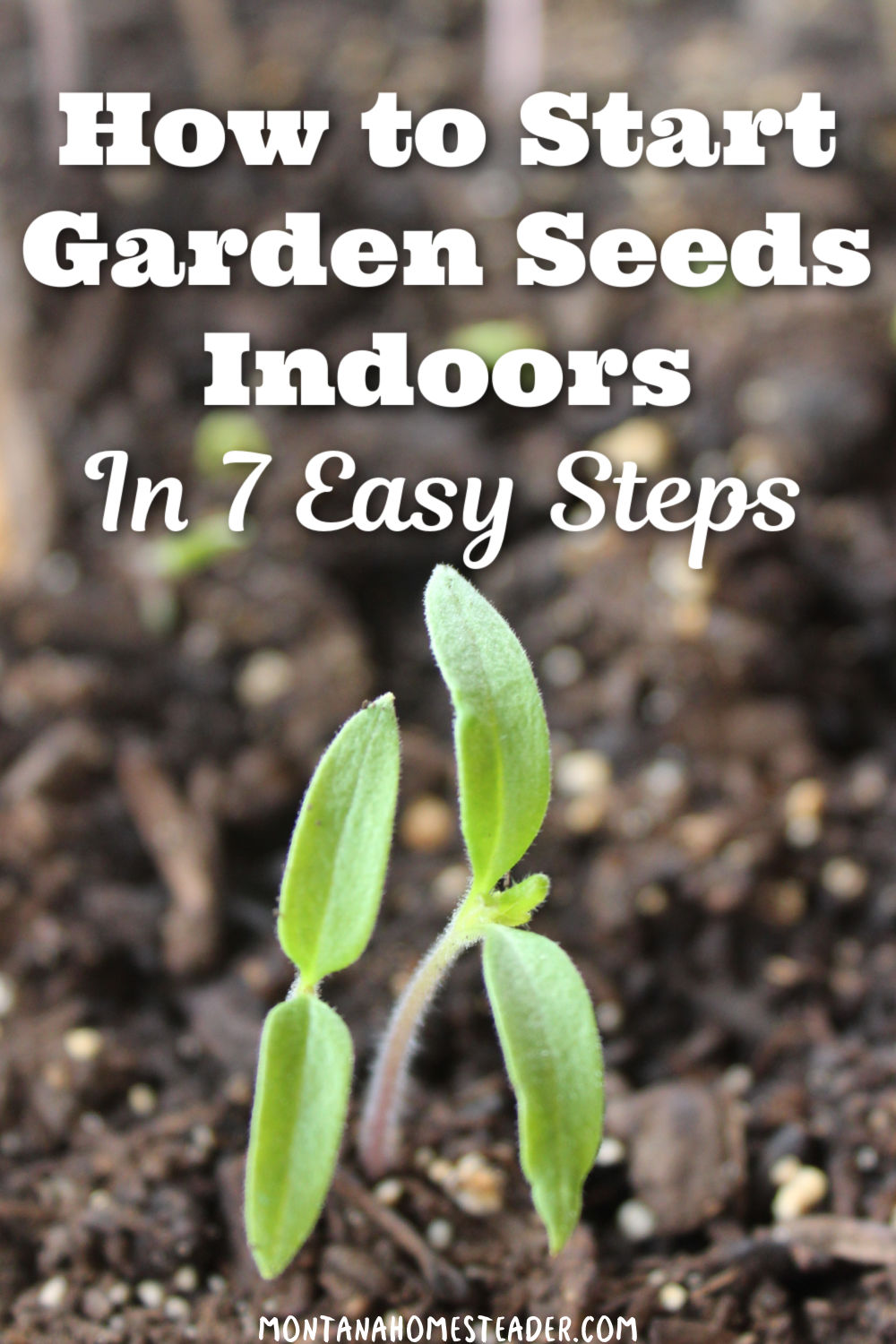
If you’re new to starting garden seeds indoors, check out our post on 7 easy steps to start garden seeds indoors.
For those of you lucky enough to have a greenhouse, here’s how to grow seedlings in a greenhouse. This time of year in Montana, you will definitely need a little supplemental heat in your greenhouse if trying to start onions and peppers in there!
7. Amend garden soil with compost or fertilizer
Amending the garden soil can be done in the fall at the end of the gardening season or late winter/early Spring before the new gardening season starts. Sometimes I remember to add compost in the fall. But usually I’m so exhausted from the busy growing and harvesting season that I put it off until after the first of the new year once my body has had time to rest a bit.
I add compost from our vermicomposting worm bins I’ve been tending for over a decade. This compost is amazing for our gardens, plus a few worms always end up being mixed in which is also very healthy for the aeration of the garden soil. If you don’t have a worm bin, you can buy bags of worm castings to amend your soil
Making compost at home with kitchen and yard waste is easy. The Old Farmer’s Almanac has a great step by step tutorial on how to make compost at home.
You can also buy bags of natural organic compost like this one made from bat guano (poop!) or this one made from composted organic dairy cow manure.
8. Winter sow seeds
There are actually two methods we use to winter sow seeds. The first easy method I learned a few years ago from a long time elder gardener in my community. I don’t know why I never thought of doing this before since this idea mimics what happens with volunteer seeds in the soil.
The concept is simple. Plant garden seeds for cold hardy vegetables like carrots, kale, chard, and beets long before the soil is warm enough for them to germinate. You can actually plant the seeds out the fall before but then you take a chance of the seeds sprouting too early and dying off like we had happen this year due to an unusually warm December.
I cover the seeds with a piece of this frost protection row cover to add a little warmth to the soil. It’s also helpful to keep out any cats wanting to use the garden as a toilet or birds trying to eat the seeds.
With this method, I’ve discovered that seeds will often start to sprout long before I would normally have planted them based on the recommendation from the back of the seed packet.
The second method of winter sowing seeds involves using plastic milk jugs cut in half. We tried this method last year for the first time and it worked great to get a head start on seedlings. Stay tuned for a how-to post coming soon!